When to Take a Musandam Dhow Cruise
November and December are the sweet spot: comfortable air, sea still at 26–28°C, and before the rain. July and August average over 35°C at 70% humidity on an open deck.
Most guides tell you to visit Musandam “in winter” and stop there. That is roughly right and it misses the actual answer, because the cool season and the rainy season are the same season.
The sweet spot is November and December.
Why November–December, specifically
By November the air has dropped out of the punishing range, and the sea is still holding summer heat — around 28°C (82°F) in November and 26°C (78°F) in December. That combination is the point: comfortable on deck, and warm enough that snorkelling is a pleasure rather than a decision.
It is also before the rain. Khasab gets very little precipitation, about 185mm (7.3in) a year, but almost all of it arrives between December and March. November averages barely any and one rain day; February, the wettest month, brings the most. On an open dhow deck, rain days count for more than the annual total suggests.
The months, plainly
November–December. The best of it. Warm air, warm water, minimal rain. Boats are busy, so book ahead.
January–March. Genuinely pleasant temperatures — January is the coolest month at about 21°C (69°F) average, ranging from 18°C to 24°C, with the coldest nights near 13°C. But this is also when the year’s rain falls, spread across two to four days a month, and the sea drops to its coolest at 23°C (73°F) in February. Still very good; just not quite the peak.
April–May. The shoulder. Hot but manageable, the water climbing back through 26°C to 29°C, and noticeably quieter than the winter weeks. If you dislike crowds more than heat, this is your window.
June–September. We would not plan a trip around these months. The daily average in July and August exceeds 35°C (95°F), humidity off the sea runs to about 70%, and the nights stay hot. The sea reaches 33°C (91°F) — bath temperature, which sounds appealing and is not: water that warm does nothing to cool you down.
Six hours on an open boat in that is an endurance event. If it is your only option, take the earliest departure of the day, drink far more than you think you need, and treat the shade on deck as compulsory rather than optional.
October. Improving quickly and often overlooked. Still hot, sea at 31°C, but the worst has passed and the winter crowds have not arrived.
What the season changes about the booking
In winter, book ahead. The morning departures fill first — they are cooler and the light is better — and dhows are shared boats with finite deck space. Free cancellation up to 24 hours before means there is no cost to reserving early.
In summer, you can be spontaneous, and you should still book the morning slot for the same reason, more urgently.
The boat does not change with the season. What changes is how long you want to be on it. In February a full-day cruise is a gift; in July the half-day is plenty and possibly too much. That is worth factoring into which tier you pick — see the price guide.
The one weather thing that cancels trips
Not heat — wind. Operators cancel for sea conditions rather than temperature, and when they do, free cancellation and rebooking is the normal outcome. It is uncommon, but it is the reason to put the cruise early in your Musandam stay rather than on the last morning, so there is room to move it.
Climate figures are 1991–2020 averages, checked September 2026.
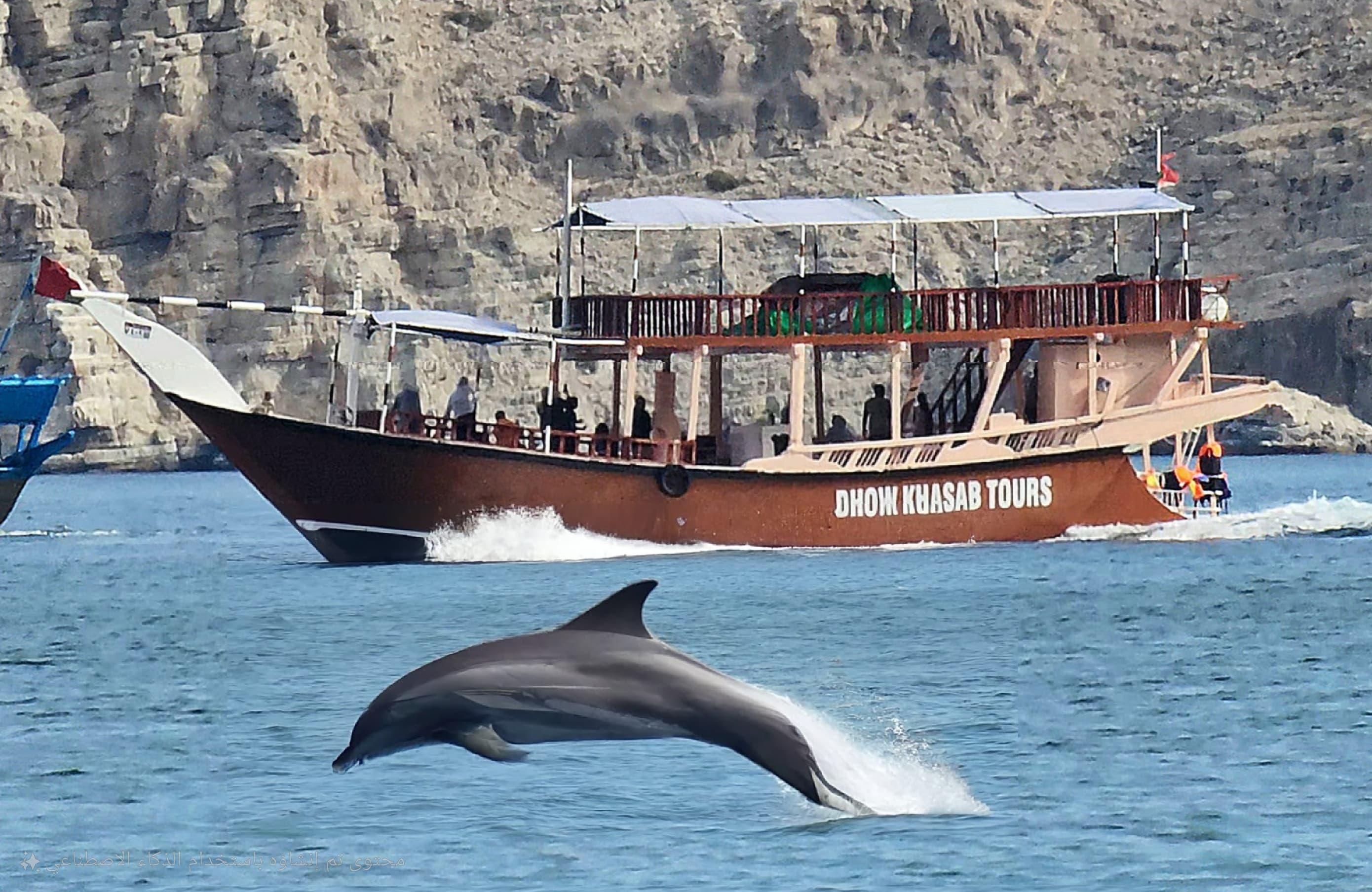
Book the Khasab Half-Day Dhow Cruise
$37 per person with free pickup inside Khasab, snorkelling equipment, refreshments and free cancellation up to 24 hours before. Rated 4.9/5 by 544 verified travellers. Coming from the UAE? Pickup can be arranged for a fee, but the border crossing is yours to plan — see the Dubai guide first.
Check Availability & Book